Building a Capability Pipeline: A Mid-Cohort Impact Report on the Bethesda BlindTech Hub
At Bethesda Home and School for the Blind, we have always believed that true empowerment is rooted in competence, rather than just care.
While our broader mission supports beneficiaries currently enrolled in various federal universities across Nigeria, we recognized a critical need to bridge the digital gap for those transitioning into the professional world.
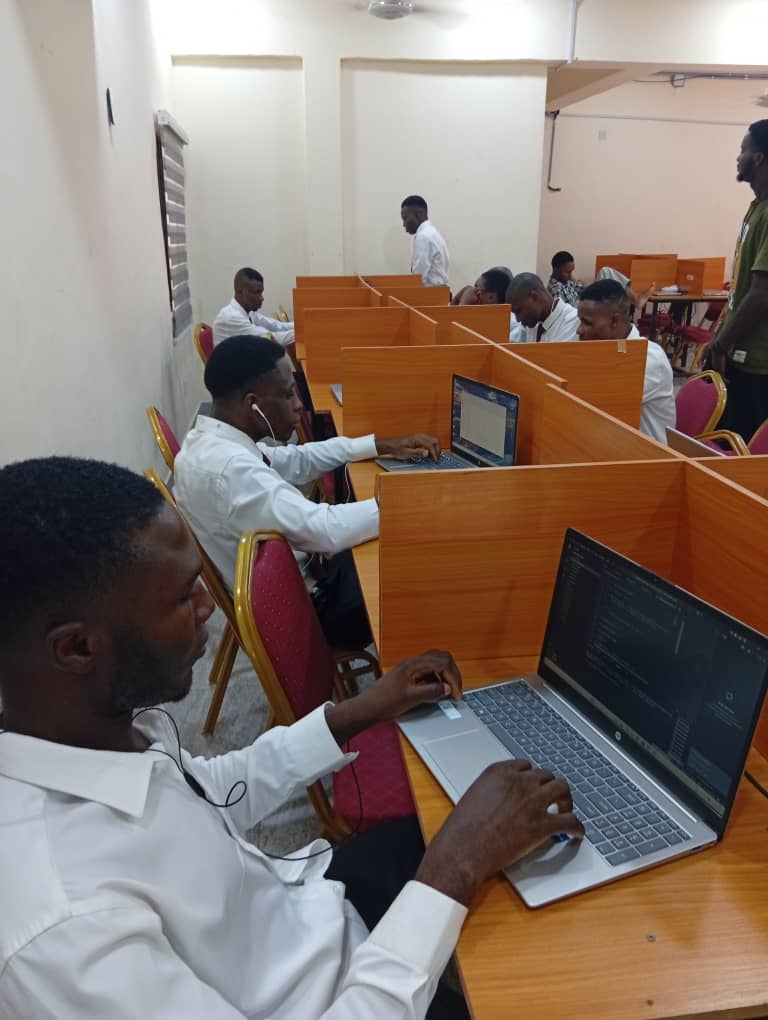
This led to the launch of the Bethesda BlindTech Hub in partnership with the Ford Foundation, a specialized technical program currently impacting 30 blind candidates enrolled in our first cohort. The initiative is designed to move beyond basic digital literacy to high-leverage technical tracks such as Back-end Web Development and DevOps.
The journey over the last eight weeks has been a profound testament to the talent and dedication of these candidates. We began by grounding the learners in the very foundations of how the digital world is built. Rather than teaching them to use the web simply, we taught them to build it from the "bones" up. Our curriculum intentionally sets aside visual styling to focus deeply on semantic structure, the logical way a website is organized, so that it is perfectly readable by assistive technology. This phase culminated in each student building a multi-page digital platform that meets international accessibility standards, proving that when code is written correctly, it is inclusive by design.
As the program transitioned into its second month, the focus shifted from structure to the "brain" of the web: programming logic. To make abstract concepts more intuitive, we introduced the "machine analogy," where every piece of code is viewed as a specialized tool designed to process information and deliver a specific result. Our students began mastering JavaScript, creating functional digital solutions for real-world scenarios. They developed automated systems to validate bank withdrawals, built tools to calculate loan eligibility, and even programmed mathematical models to solve complex equations. This period marked a significant shift as the students moved from following instructions to solving problems independently.
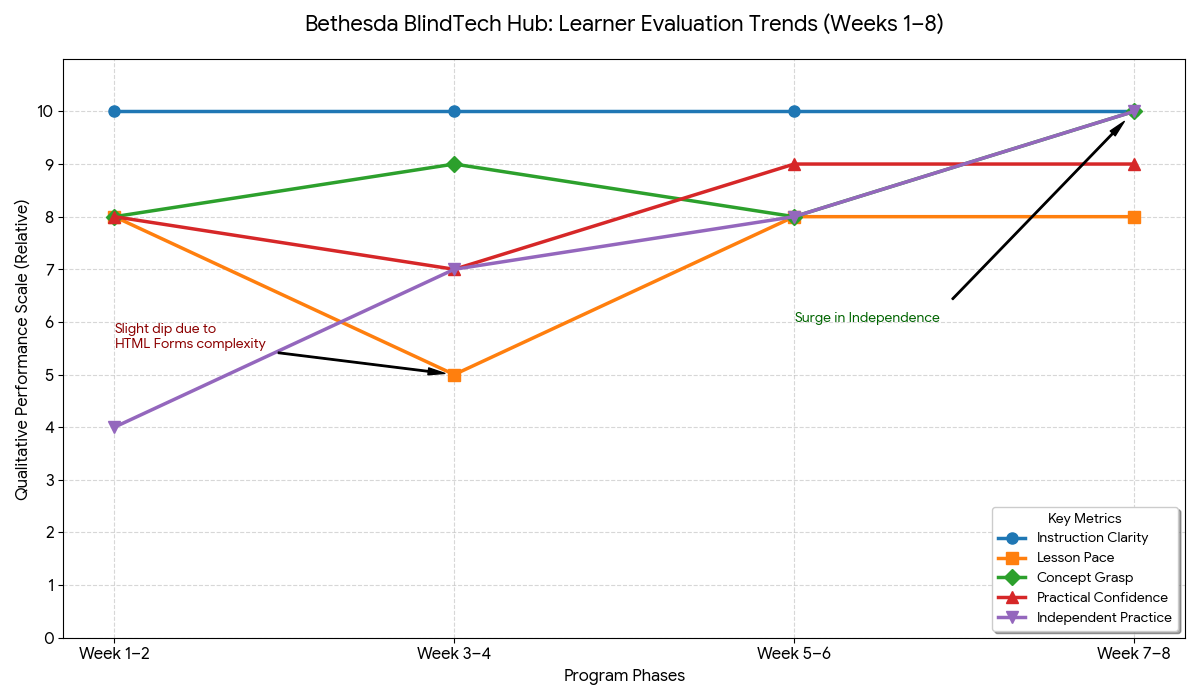
Throughout this period, learner evaluations have consistently underscored a high level of satisfaction and technical growth among the cohort. The instruction has been received with exceptional enthusiasm, with participants frequently describing the clarity and teaching methods as outstanding and top-tier, while noting that the overall experience has been both deeply enlightening and professionally transformative. While the pace of the lessons was generally viewed as well-balanced and steady, the minor challenges encountered during complex topics like HTML Forms provided valuable data for instructional refinement, ensuring that core concepts remained accessible. This structured approach has yielded a comprehensive and robust grasp of key competencies, particularly in HTML architecture and JavaScript logic, with learners reporting immense confidence in applying new skills to practical, real-world tasks.
For instance, Olubukola Adewale showed a standout aptitude for practical logic application; following sessions on conditional logic, she noted how building the "ATM multiple validator" and "loan eligibility" projects made abstract arithmetic feel tangible and useful. Similarly, Iyanuoluwa Omotayo excelled in the area of performance-driven development. He found the sessions on the Document Object Model (DOM) particularly enlightening, specifically noting that learning to use "DocumentFragments" to batch updates and save memory gave him a sophisticated edge. His feedback reflected a self-assured transition from simply writing code to understanding the professional engineering standards required for high-performance applications.
Most significantly, as the program progressed into its second month, students demonstrated a pronounced and visible surge in their readiness to practice independently. This signals a successful transition from guided instruction toward the self-assured problem-solving and technical mastery required to excel in the modern global workforce.